Welcoming Spring and New Arrivals to the Farm
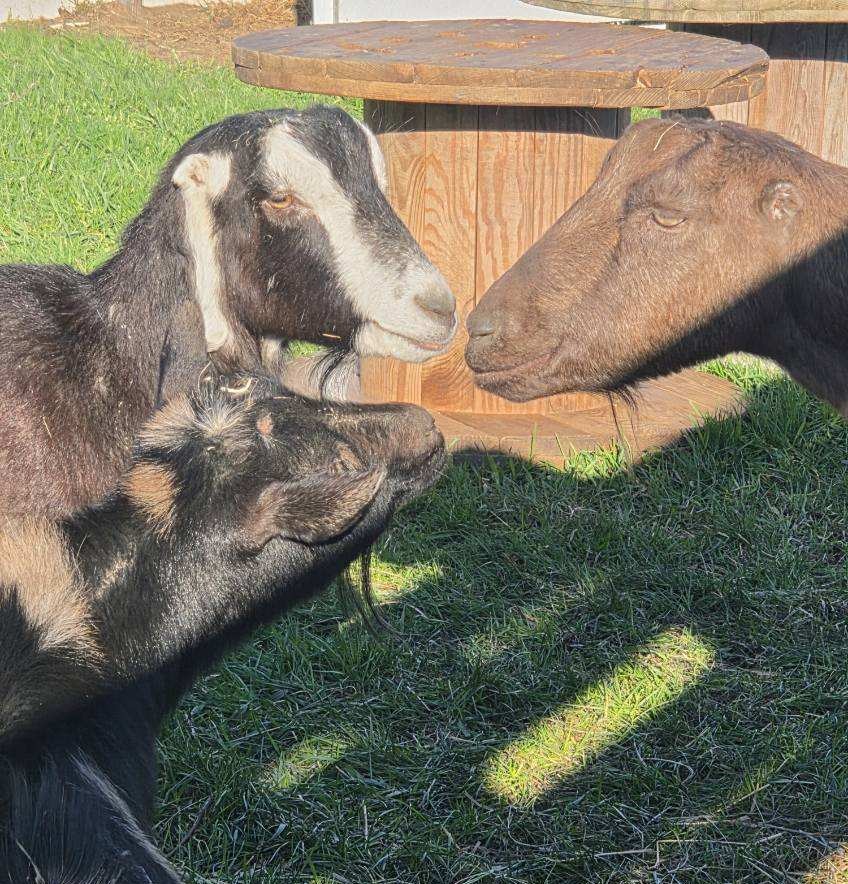
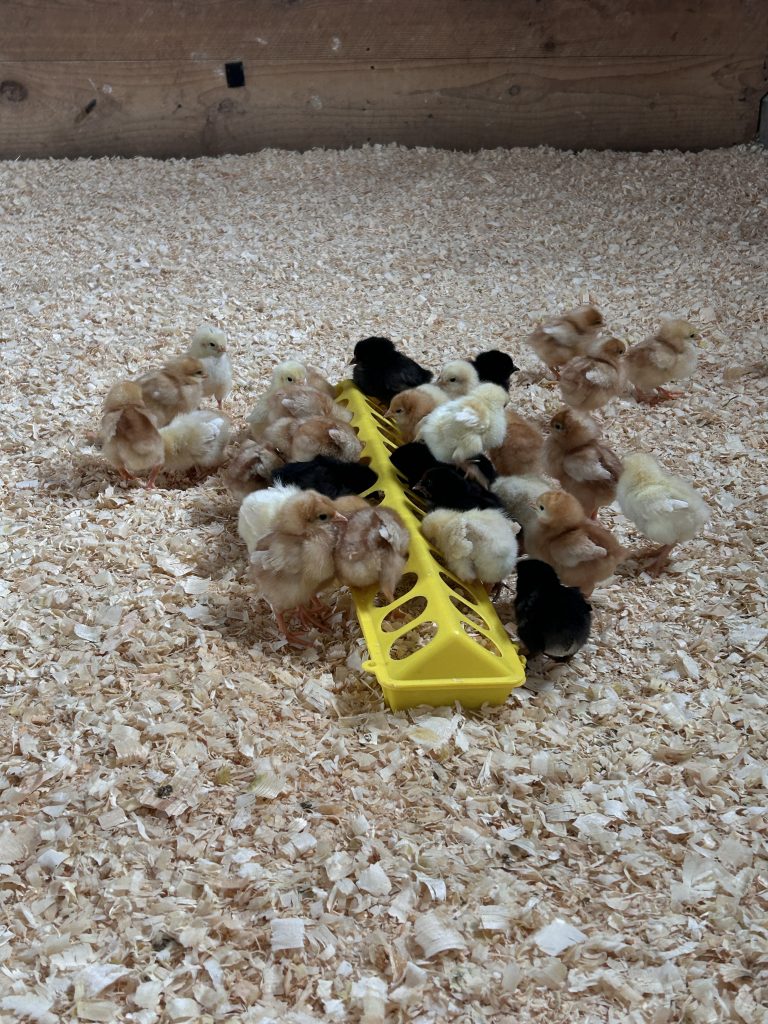
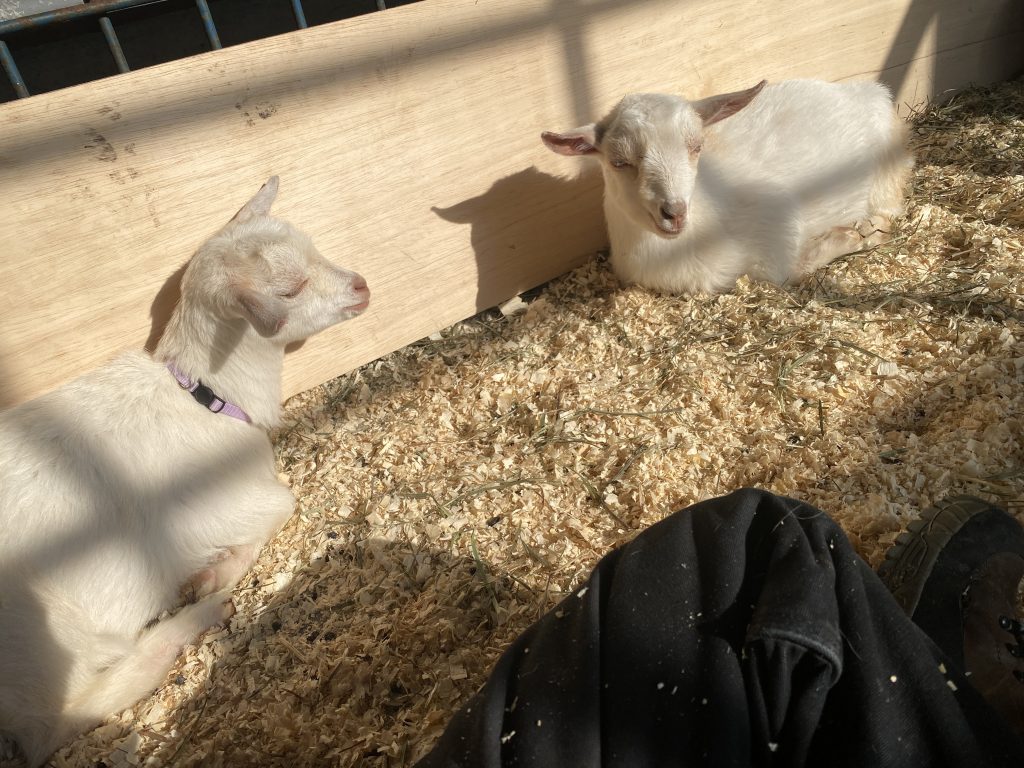
New to the farm this spring, the Education Department will be incubating a small batch of coturnix quail eggs in the Smokehouse Visitor Center throughout the month of May. We anticipate these chicks will hatch just in time for our brand new Spring into Summer Fest event! These feathered friends will reside in our newly opened small animal barn and become egg-layers for the farm once they grow up. In addition to these soon-to-be-chicks, the Education Department has also recently welcomed 150+ new chicks (chicken), 4 new goats, and 1 new rabbit to the farm!
What are coturnix quail?
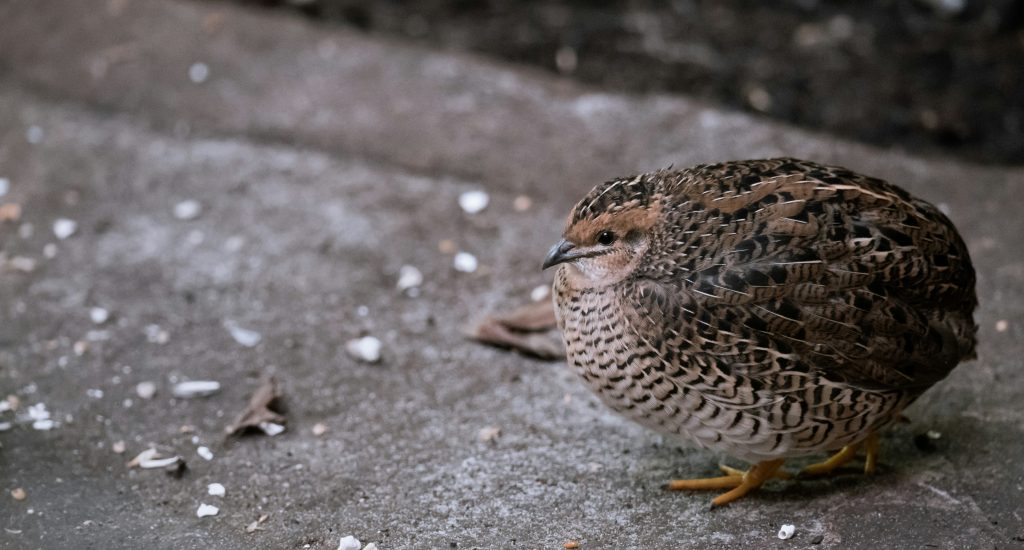
Coturnix quail (coturnix japonica) are small, domestic, ground-dwelling birds with skittish but gentle temperaments that come in a variety of patterns and colors. Though they share a lot of similarities with chickens, they have distinctly different care needs and personalities.
Like chickens, coturnix quail…
- Are commonly raised for their eggs or meat
- Are capable of flight, especially when startled. However, they are quite clumsy fliers and prefer sticking to the ground
- Are called the same terms: males are roosters, females are hens, babies are chicks
- Can be quite messy, their feathers produce dust and their droppings can be smelly
Unlike chickens, coturnix quail…
- Are significantly smaller, they range from 4-7 inches in height and weigh less than a pound
- Fully mature and begin laying eggs by the time they are 6-8 weeks old
- Are quieter. Though males still crow, quail hens are much quieter than chicken hens
- Require a different diet. Quail need 20-22% protein in their diet as adults, and 28% as chicks
Why keep quail for eggs?
Coturnix quail do not require as much space as chickens due to their smaller size, making them a great fit for those who may not have the space for a flock of larger birds. They cannot be free-ranged safely as they do not have a homing instinct that drives them to return to a coop every night as chickens do and are at risk of predation by predators such as birds of prey, weasels, foxes, raccoons, and more. However, quail do very well indoors or outdoors so long as they are kept in hutches or aviaries as they prefer a quiet, secure environment with lots of hiding spots.
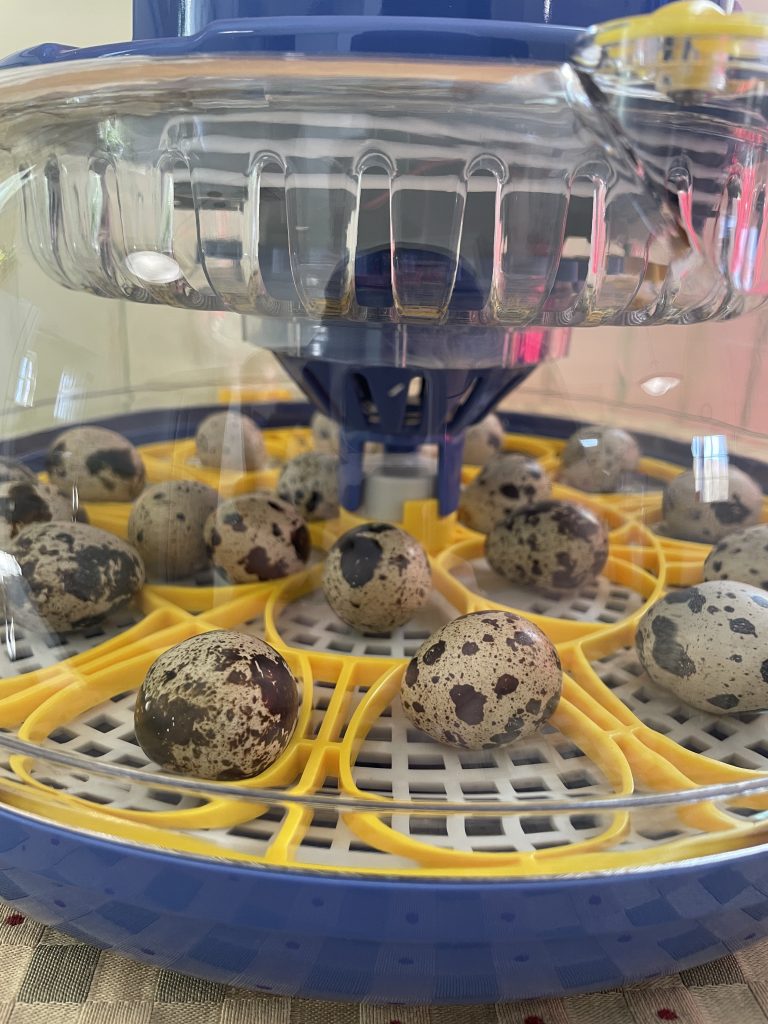
Hens lay a single tiny egg weighing about 10 grams every 18-36 hours. While coturnix quail generally lay brown-and-tan speckled eggs, some carry a recessive trait that causes them to lay blue eggs. This trait is called “celadon”. Quail eggs are considered a delicacy by some and despite their small size they are by weight more nutrient-dense than chicken eggs with a higher yolk-to-white ratio. Quail eggs can be prepared and eaten in any way that chicken eggs are, but they are most often pickled or used as garnishes or toppers for other dishes due to their small size.
Visit our newest additions and our other resident farmyard friends by purchasing a 2-Hour Farm Pass, or by preregistering for our very first Spring into Summer Fest taking place on May 31st at 10 AM – 4 PM.