International Year of the Woman Farmer: Ashley Gendreau
From Classroom Teaching to Fiber Arts: Finding connection through Farm Education
As part of our celebration of the International Year of the Woman Farmer, we’re highlighting the women of Pineland Farms and the important work they do to connect visitors with agriculture. Through animal care, hands-on learning, and educational programming, the Education Department helps visitors of all ages discover the stories behind life on the farm.
For Farm Educator Ashley Gendreau, that means combining her passion for learning and creativity with opportunities to explore the farm’s animals, natural fibers, and the many ways agriculture connects to everyday life.
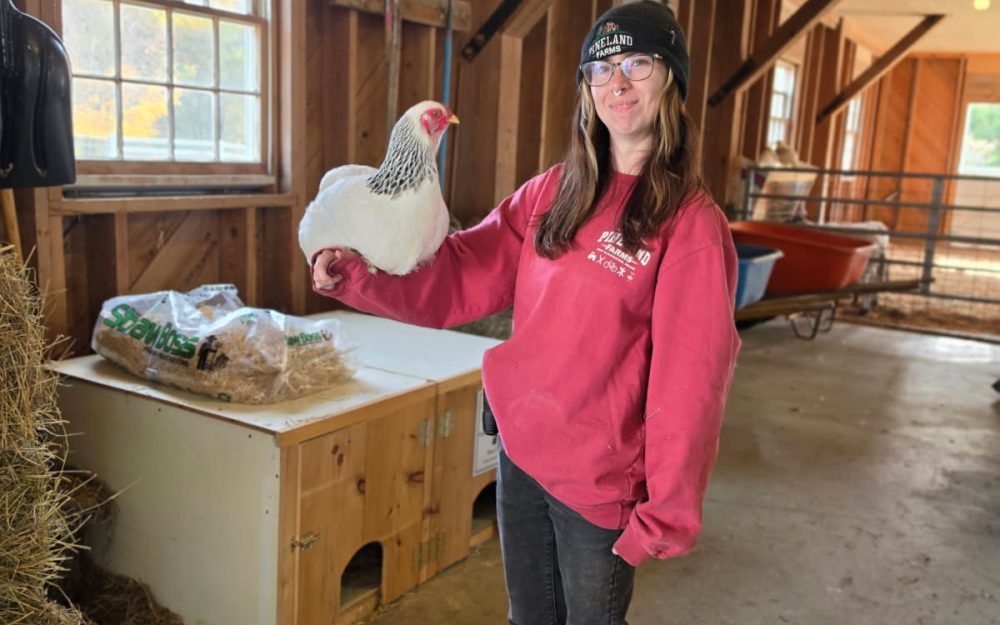
A Different Path to Education
Growing up in Northern Maine, Ashley spent time outdoors with her family hunting, fishing, and canoeing. Her educational path, however, took her in a different direction. She earned a degree in Secondary Education with a concentration in Social Studies and a minor in Anthropology from the University of Maine at Farmington.
After graduation, Ashley realized that a traditional public school teaching position wasn’t the right fit and began looking for opportunities to explore education beyond the classroom. She discovered an opening at Pineland Farms in July 2025 and joined the Education Department that August.
Although Ashley had always been interested in agriculture and animal care, she had little hands-on experience with livestock before joining the team. Her background in fiber arts, however, provided an unexpected connection to her new role.
Ashley first learned to crochet from her high school math teacher and went on to create garments, toys, and decorative pieces, some of which she sold at local craft fairs during college. In the summer of 2020, she also taught herself to needle felt.
Her first creation was a small, slightly wonky sheep she named Rammington.
“I put him on the dash of my very first car, and he still lives in my current car to this day,” Ashley shares. “I like to imagine him as being a little protective charm.”
Today, that creative interest has become an important part of her work at Pineland, where she introduces visitors to the possibilities of working with natural fibers.
A Day in the Education Department
No two days look exactly alike for Ashley and the Education Department team. Some days are filled with school field trips, scheduled programs, and conversations with visitors. Others offer time to develop new educational experiences, prepare wool for upcoming workshops, create seasonal displays, or research ways to enrich the lives of the farm’s animals.
Caring for the animals is also an important part of the job. It takes teamwork, patience, and an understanding of each animal’s individual personality to keep them happy and healthy.
When planning educational activities, Ashley combines hands-on experiences with direct instruction, adjusting her approach to suit each audience.
During Pineland’s first annual Spring into Summer Fest, she helped lead a “sheep shop” display featuring wool samples from the farm’s sheep, a raw fleece on the skirting table, and the tools used to process wool. Visitors could watch Ashley wash wool and even lend a hand.
Some were most interested in feeling the wool and comparing its textures, while others wanted to learn about the process from start to finish.
These experiences allow visitors to explore agriculture at their own pace, whether they’re simply curious about the animals or eager to discover how raw materials become something useful.
Getting to Know Pineland’s Fiber Animals
One of Ashley’s specialties is helping visitors understand the different fibers produced by the animals at Pineland Farms. Each breed has its own characteristics, making the farm an ideal place to explore the variety of natural fibers.
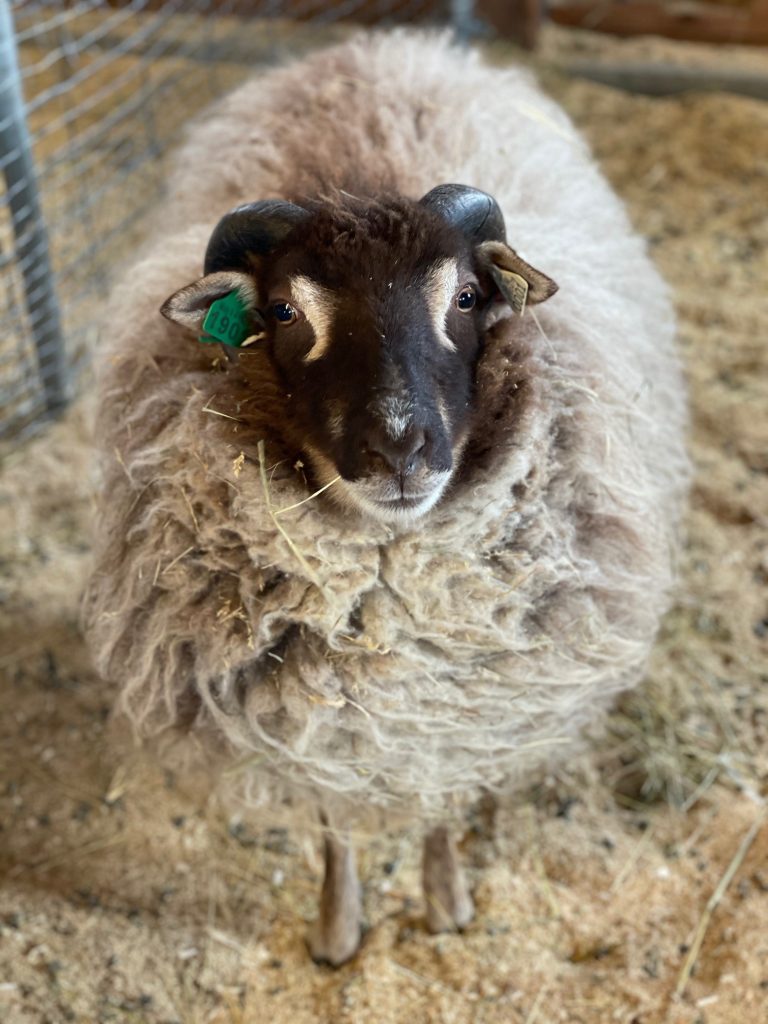
Francine, Pineland’s Finnish Landrace sheep, produces soft, curly, grayish-brown wool and is the friendliest of the sheep, often eager to meet new people.
Peach, a Katahdin sheep, is a hair breed rather than a traditional wool breed. She grows a fluffy winter coat that she naturally sheds in the spring, and local birds sometimes collect her soft fuzz for their nests.
The Shetland twins, Phineas and Pherdinand, have their own distinctive fleeces. Phineas produces white, crimped wool that works well for spinning and felting, while Pherdinand’s gray coat contains both wool and longer, coarser guard hairs that help make it more weather-resistant.
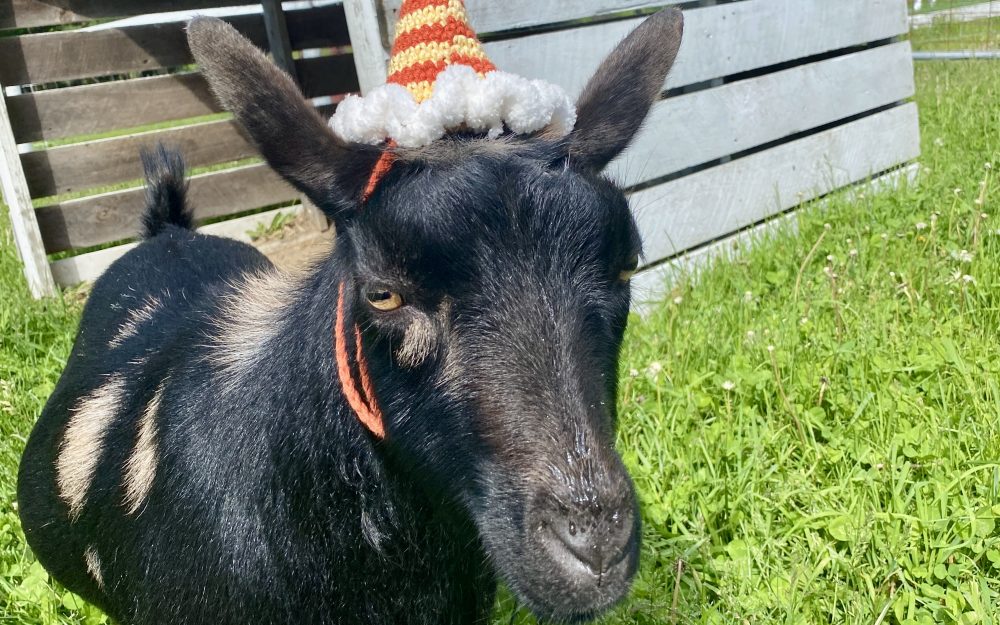
The farm’s other residents have fiber stories to tell, too. Poppy, the eldest of Pineland’s Nigerian dwarf goats, grows a remarkably soft cashmere undercoat during the winter. Lady Marmalade, the farm’s lionhead rabbit, produces fine fur that can be used for spinning or felting.
Although these other fibers aren’t currently part of the farm’s regular programs, Ashley hopes to explore more opportunities in the future. For now, the animals offer visitors a glimpse into the many natural materials that can be found right on the farm.
From Raw Fleece to Fiber Arts
Turning a sheep’s fleece into usable wool takes considerably more time and care than many people realize. Pineland’s sheep are typically shorn in October and April, after which the fleece must be skirted to remove undesirable sections, washed carefully, dried, and prepared for use.
Much of this work happens during the winter months, when the Education Department has more time to process its stored wool. The clean fibers are typically run through a manual carding drum, which brushes and aligns them into a soft batt ready for fiber projects.
For Ashley, demonstrating this process helps visitors appreciate the work behind the materials they use.
“How labor-intensive it is to do it by hand!” she says when describing what she wishes more consumers understood about natural fibers.
A professional shearer may remove a fleece in just a few minutes, but the cleaning and preparation that follow can take hours. The work requires patience and attention to detail, particularly when washing wool without accidentally felting the fibers together.
Ashley also enjoys explaining how a fleece can reveal clues about a sheep’s life. Bits of hay, sawdust, mud, and other plant matter can tell a story about where an animal spends its time and how its coat has been cared for.
She hopes visitors remember those details when they encounter wool products elsewhere, gaining a greater appreciation for the animal that grew the fiber and the many hands involved in transforming it.
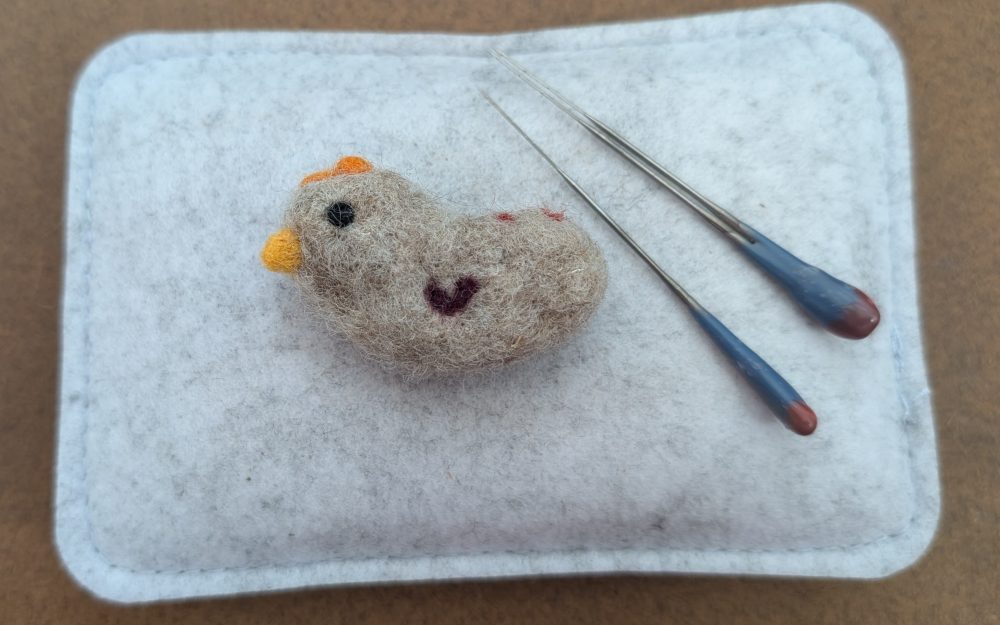
Ashley’s own experience with fiber arts also makes her especially excited to teach needle felting. In this craft, a specialized barbed needle is used to work wool fibers together until they form a solid shape. Her Needle Felting for Beginners workshop is one she designed herself.
“Needle felting can be very cathartic: if you’re having a bad day, you get to stab some wool repeatedly until you feel better,” she says. “If you’re having a good day, you get to relax and chat with the repetitive motion.”
For Ashley, fiber arts are approachable because participants don’t need prior experience to create something they can be proud of.
“You don’t need to go in knowing anything about fiber to be able to create something you can be proud of with it,” she explains.
She especially enjoys seeing people try something new and take pride in their creations. Some may leave with a small felted chicken and a fun memory of their day at the farm, while others may discover a hobby they want to pursue for years to come.
Women in Agriculture
As part of the International Year of the Woman Farmer, Ashley reflects on the importance of making women’s contributions to agriculture more visible.
The Education Department at Pineland Farms is made up mostly of women, giving visitors an opportunity to see women working directly with livestock, leading educational programs, and sharing agricultural knowledge.
“Women across history and spanning many cultures have always contributed to agriculture, though not always as visibly as men,” Ashley says. “I am happy to see that in modern times, that perception is shifting.”
Through their daily work, Ashley and her colleagues hope to inspire the next generation to recognize farming as the necessary and valuable work it is, while encouraging anyone interested in the field to pursue it regardless of gender.
Her advice to young people and women considering a career in agricultural education or livestock care is to find a way into the industry, even if it isn’t the path they originally imagined, and learn from those with experience.
She also encourages aspiring agricultural professionals to remain curious.
“Find a rabbit hole that interests you and learn everything you can about it,” she advises. “If you lose interest, just move on to learning about the next thing.”
The Small Moments That Make a Difference
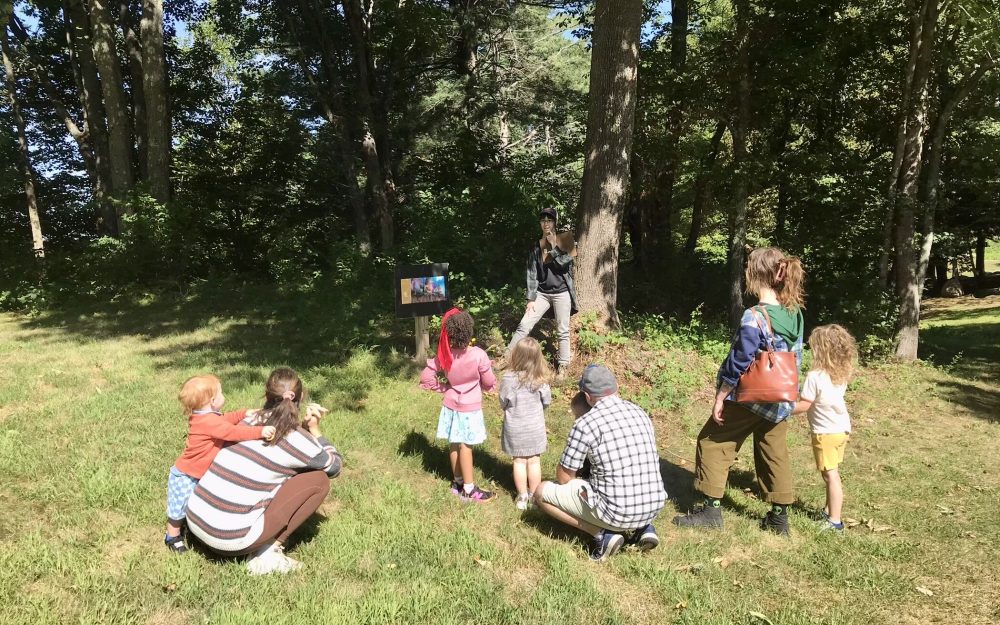
Some of Ashley’s proudest moments at Pineland Farms come from unexpected reminders that her work is making a difference.
She recalls a family returning for a program after attending one of her earlier workshops. Although Ashley had left the original program feeling that it could have gone better, the parent shared that the children had been talking about the experience all weekend.
“It made me feel great about my teaching,” Ashley says. “Being remembered positively by visitors is a great feeling, because we see and interact with so many people a day that we don’t always see the impact our work has on visitors on an individual, personal level.”
Her relationships with the farm’s animals have created equally meaningful moments. Quinoa, Pineland’s semi-feral barn cat, was once reluctant to let staff get close enough to pet her. Over time, she has become more comfortable with the people who care for her.
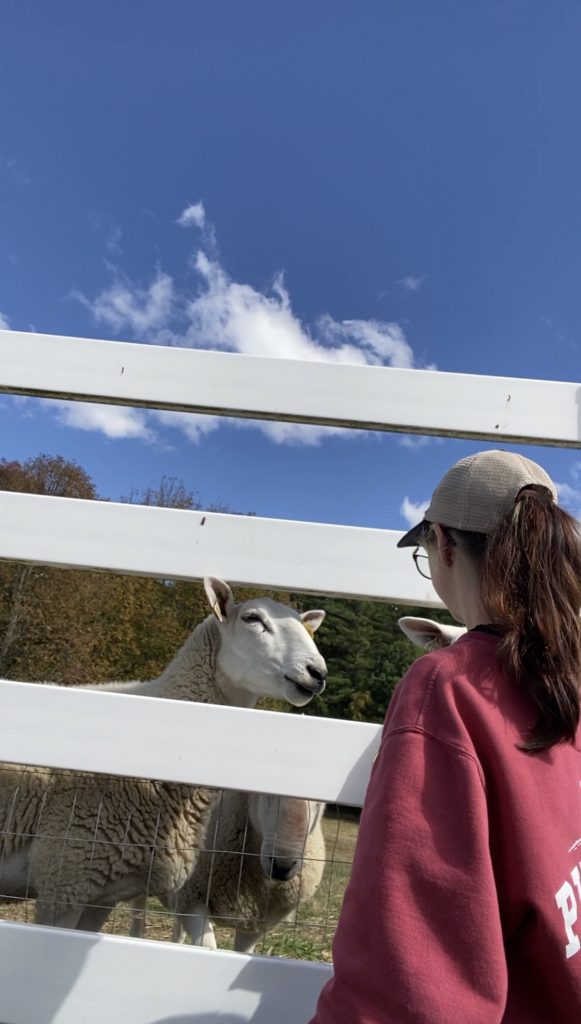
Ashley has also earned the trust of Pherdinand, the shyest of the farm’s sheep. Through quiet afternoons spent observing the animals and interacting with them on their own terms, she gradually built a relationship with him. Now, he sometimes sticks his foot through the fencing and bangs it against the barrier to get Ashley’s attention when he wants to be petted.
For Ashley, these moments reflect the patience and consistency that go into caring for animals and building relationships with them.
Whether she’s introducing visitors to the farm’s animals, helping someone discover a new creative hobby, or earning the trust of a particularly shy resident, Ashley brings curiosity and care to her work every day. Her story is a reminder that women contribute to agriculture in many ways, including through education, creativity, and inspiring the next generation to learn.
Interested in discovering more at Pineland Farms? Explore our Farm Education programs to learn about upcoming opportunities to connect with agriculture.